---
title: Lipid-basierte Drug Delivery-Entwicklung mit Cayman – Teil 2
description: Die bekannteste Variante der „Lipid-basierten Arzneimittelverabreichungssysteme“ stellen die sogenannten Lipid-Nanopartikel dar.
image: https://ressourcen.biomol.com/hubfs/Imported_Blog_Media/LBDDs_Preview_new-Apr-07-2025-08-34-45-6077-PM.png
---
de
DE EN
[** Mein Konto ](https://www.biomol.com/de/account)
** Service/Hilfe
- [Kontakt](https://www.biomol.com/de/kontakt)
- [Technischer Kundenservice](https://www.biomol.com/de/technischer-kundenservice)
- [FAQ](https://support.biomol.com/de/?hsLang=de)
- [Versandkosten](https://www.biomol.com/de/versandkosten)
- [Produkt-Suchtipps](https://www.biomol.com/de/produkt-suchtipps)
- [Distributoren](https://www.biomol.com/de/distributoren)
- [Firmengeschichte](https://www.biomol.com/de/firmengeschichte)
- Cookie-Einstellungen
- [** Menü ](https://ressourcen.biomol.com/de/biomol-blog/lipid-basierte-drug-delivery-entwicklung-mit-cayman-teil-2#offcanvas--left)
- [**Suchtipps ](https://www.biomol.com/de/produkt-suchtipps)
- [** Suchen ](https://ressourcen.biomol.com/de/biomol-blog/lipid-basierte-drug-delivery-entwicklung-mit-cayman-teil-2#show-hide--search)
** Suchen
- [** ](https://www.biomol.com/de/produkt-suchtipps)
- [** Mein Konto ](https://www.biomol.com/de/account)
- [Produkte ](https://www.biomol.com/products/)
- [Hersteller ](https://www.biomol.com/de/hersteller/)
- [Ressourcen ](https://www.biomol.com/de/ressourcen/)
- [Aktionen ](https://www.biomol.com/de/aktionen/)
- [Über Biomol ](https://www.biomol.com/de/ueber-biomol/)
- [** Mein Konto ](https://www.biomol.com/de/account)
[** Zur Kategorie Hersteller ](https://www.biomol.com/de/produkte/) **
- [Antikörper](https://www.biomol.com/de/produkte/antikoerper/)
- [Primärantikörper](https://www.biomol.com/de/produkte/antikoerper/primaerantikoerper/)
- [Sekundärantikörper](https://www.biomol.com/de/produkte/antikoerper/sekundaerantikoerper/)
- [Igs und Isotypkontrollen](https://www.biomol.com/de/produkte/antikoerper/igs-und-isotypkontrollen/)
- [Antikörper-Panels](https://www.biomol.com/de/produkte/antikoerper/antikoerper-panels/)
- [Assay-Kits](https://www.biomol.com/de/produkte/assay-kits/)
- [ELISA und Immunassays](https://www.biomol.com/de/produkte/assay-kits/elisa-und-immunassays/)
- [Biochemische Assays](https://www.biomol.com/de/produkte/assay-kits/biochemische-assays/)
- [Zellbasierte Assays](https://www.biomol.com/de/produkte/assay-kits/zellbasierte-assays/)
- [Biologische Proben](https://www.biomol.com/de/produkte/biologische-proben/)
- [Zellen](https://www.biomol.com/de/produkte/biologische-proben/zellen/)
- [Virus-basierte Tools](https://www.biomol.com/de/produkte/biologische-proben/virus-basierte-tools/)
- [Lysate](https://www.biomol.com/de/produkte/biologische-proben/lysate/)
- [Nukleinsäuren](https://www.biomol.com/de/produkte/biologische-proben/nukleinsaeuren/)
- [Blutprodukte](https://www.biomol.com/de/produkte/biologische-proben/blutprodukte/)
- [Gewebe](https://www.biomol.com/de/produkte/biologische-proben/gewebe/)
- [Sonstige](https://www.biomol.com/de/produkte/biologische-proben/sonstige/)
- [Chemikalien](https://www.biomol.com/de/produkte/chemikalien/)
- [Biochemikalien](https://www.biomol.com/de/produkte/chemikalien/biochemikalien/)
- [Lipide](https://www.biomol.com/de/produkte/chemikalien/lipide/)
- [Referenzstandards](https://www.biomol.com/de/produkte/chemikalien/referenzstandards/)
- [Farbstoffe und Labeling](https://www.biomol.com/de/produkte/chemikalien/farbstoffe-und-labeling/)
- [Antibiotika](https://www.biomol.com/de/produkte/chemikalien/antibiotika/)
- [Biologische Puffer](https://www.biomol.com/de/produkte/chemikalien/biologische-puffer/)
- [Detergenzien](https://www.biomol.com/de/produkte/chemikalien/detergenzien/)
- [CpG-ODN's](https://www.biomol.com/de/produkte/chemikalien/cpg-odn-s/)
- [Screening-Libraries](https://www.biomol.com/de/produkte/chemikalien/screening-libraries/)
- [Plasmide](https://www.biomol.com/de/produkte/plasmide/)
- [cDNA-Klone](https://www.biomol.com/de/produkte/plasmide/cdna-klone/)
- [Sonstige](https://www.biomol.com/de/produkte/plasmide/sonstige/)
- [Primer](https://www.biomol.com/de/produkte/primer/)
- [qPCR Primer](https://www.biomol.com/de/produkte/primer/qpcr-primer/)
- [qPCR Genfamilien-Primer](https://www.biomol.com/de/produkte/primer/qpcr-genfamilien-primer/)
- [qPCR Kontroll-Primer](https://www.biomol.com/de/produkte/primer/qpcr-kontroll-primer/)
- [qPCR Primer-Libraries](https://www.biomol.com/de/produkte/primer/qpcr-primer-libraries/)
- [Proteine und Peptide](https://www.biomol.com/de/produkte/proteine-und-peptide/)
- [Proteine](https://www.biomol.com/de/produkte/proteine-und-peptide/proteine/)
- [Zytokine](https://www.biomol.com/de/produkte/proteine-und-peptide/zytokine/)
- [Peptide](https://www.biomol.com/de/produkte/proteine-und-peptide/peptide/)
- [Toolkits](https://www.biomol.com/de/produkte/toolkits/)
- [Kit-Komponenten](https://www.biomol.com/de/produkte/toolkits/kit-komponenten/)
- [Labeling-Kits](https://www.biomol.com/de/produkte/toolkits/labeling-kits/)
- [Kits zur Probenvorbereitung](https://www.biomol.com/de/produkte/toolkits/kits-zur-probenvorbereitung/)
- [Klonierungs- und Expressionskits](https://www.biomol.com/de/produkte/toolkits/klonierungs-und-expressionskits/)
- [Mutagenese-Kits](https://www.biomol.com/de/produkte/toolkits/mutagenese-kits/)
- [Sequenzierungskits](https://www.biomol.com/de/produkte/toolkits/sequenzierungskits/)
- [Zusätzliche Reagenzien](https://www.biomol.com/de/produkte/zusaetzliche-reagenzien/)
- [Färbelösungen](https://www.biomol.com/de/produkte/zusaetzliche-reagenzien/faerbeloesungen/)
- [Zellkulturmedien](https://www.biomol.com/de/produkte/zusaetzliche-reagenzien/zellkulturmedien/)
- [Agarosen](https://www.biomol.com/de/produkte/zusaetzliche-reagenzien/agarosen/)
- [Stabilisatoren](https://www.biomol.com/de/produkte/zusaetzliche-reagenzien/stabilisatoren/)
- [Protein-Marker](https://www.biomol.com/de/produkte/zusaetzliche-reagenzien/protein-marker/)
- [DNA-Leitern](https://www.biomol.com/de/produkte/zusaetzliche-reagenzien/dna-leitern/)
- [Transfektionsreagenzien](https://www.biomol.com/de/produkte/zusaetzliche-reagenzien/transfektionsreagenzien/)
[** Zur Kategorie Hersteller ](https://www.biomol.com/de/produkte/) **
- [AAT Bioquest](https://www.biomol.com/de/aat-bioquest/)
- [Abcore](https://www.biomol.com/de/abcore/)
- [Absea](https://www.biomol.com/de/absea/)
- [Acepix Biosciences](https://www.biomol.com/de/acepix/)
- [AdipoGen Life Sciences](https://www.biomol.com/de/adipogen/)
- [Akadeum Life Sciences](https://www.biomol.com/de/akadeum-life-sciences/)
- [Alithea Genomics](https://www.biomol.com/de/alithea-genomics/)
- [Amsbio](https://www.biomol.com/de/amsbio/)
- [Ancell](https://www.biomol.com/de/ancell/)
- [Arigo Biolaboratories](https://www.biomol.com/de/arigo/)
- [Assay Genie](https://www.biomol.com/de/assay-genie/)
- [AssayQuant](https://www.biomol.com/de/assayquant/)
- [Atlas Antibodies](https://www.biomol.com/de/atlas-antibodies/)
- [Badische Peptide & Proteine](https://www.biomol.com/de/bpp/)
- [Bertin Bioreagent](https://www.biomol.com/de/bertin-bioreagent/)
- [Bethyl Laboratories](https://www.biomol.com/de/bethyl/)
- [Biomol GmbH](https://www.biomol.com/de/biomol-gmbh/)
- [Biotium](https://www.biomol.com/de/biotium/)
- [BPS Bioscience](https://www.biomol.com/de/bps/)
- [Cavidi](https://www.biomol.com/de/cavidi/)
- [Cayman Chemical](https://www.biomol.com/de/cayman/)
- [Chemodex](https://www.biomol.com/de/chemodex/)
- [Chimerigen Laboratories](https://www.biomol.com/de/chimerigen/)
- [Croyez](https://www.biomol.com/de/croyez/)
- [Cusabio](https://www.biomol.com/de/cusabio/)
- [Cytion](https://www.biomol.com/de/cytion/)
- [Diaclone](https://www.biomol.com/de/diaclone/)
- [DIMA Biotech](https://www.biomol.com/de/dima/)
- [Elabscience](https://www.biomol.com/de/elabscience/)
- [ELK Biotechnology](https://www.biomol.com/de/elk-biotechnology/)
- [Expert Synthesis Solutions](https://www.biomol.com/de/ess/)
- [ForMedium](https://www.biomol.com/de/formedium/)
- [GenScript](https://www.biomol.com/de/genscript/)
- [Hycult Biotech](https://www.biomol.com/de/hycult-biotech/)
- [ImmunoChemistry](https://www.biomol.com/de/ict/)
- [Indigo Biosciences](https://www.biomol.com/de/indigo/)
- [Innaxon](https://www.biomol.com/de/innaxon/)
- [InVitria](https://www.biomol.com/de/invitria/)
- [IsoSciences](https://www.biomol.com/de/isosciences/)
- [JaICA](https://www.biomol.com/de/jaica/)
- [KACTUS](https://www.biomol.com/de/kactus/)
- [Kingfisher Biotech](https://www.biomol.com/de/kingfisher/)
- [LKT Laboratories](https://www.biomol.com/de/lkt/)
- [LubioScience](https://www.biomol.com/de/lubioscience/)
- [Micronbrane Medical](https://www.biomol.com/de/micronbrane/)
- [MONOSAN](https://www.biomol.com/de/monosan/)
- [nanoComposix](https://www.biomol.com/de/nanocomposix/)
- [Navinci Diagnostics](https://www.biomol.com/de/navinci/)
- [NeoBiotechnologies](https://www.biomol.com/de/neobiotechnologies/)
- [NewEast Biosciences](https://www.biomol.com/de/neweastbio/)
- [Novoprotein](https://www.biomol.com/de/novoprotein/)
- [NSJ Bioreagents](https://www.biomol.com/de/nsjbio/)
- [NuSep](https://www.biomol.com/de/nusep/)
- [NZYtech](https://www.biomol.com/de/nzytech/)
- [ORF Genetics](https://www.biomol.com/de/orf-genetics/)
- [Pacific Coast Bio](https://www.biomol.com/de/pacific-coast-bio/)
- [Peptides & Elephants](https://www.biomol.com/de/peptides-and-elephants/)
- [Quantoom Biosciences](https://www.biomol.com/de/quantoom/)
- [Randox](https://www.biomol.com/de/randox/)
- [RealTimePrimers](https://www.biomol.com/de/realtimeprimers/)
- [Research Donors](https://www.biomol.com/de/research-donors/)
- [RevMAb Biosciences](https://www.biomol.com/de/revmab/)
- [Rockland Immunochemicals](https://www.biomol.com/de/rockland/)
- [Slingshot Biosciences](https://www.biomol.com/de/slingshot/)
- [South Bay Bio](https://www.biomol.com/de/south-bay-bio/)
- [SYNkinase](https://www.biomol.com/de/synkinase/)
- [TargetMol](https://www.biomol.com/de/targetmol/)
- [U-genes](https://www.biomol.com/de/u-genes/)
- [United States Biological](https://www.biomol.com/de/usbiological/)
- [Virax Biolabs](https://www.biomol.com/de/virax-biolabs/)
[** Zur Kategorie Hersteller ](https://www.biomol.com/de/produkte/) **
- [Biomol Blog](https://ressourcen.biomol.com/de/biomol-blog)
- [Anwendungen](https://www.biomol.com/de/ressourcen/anwendungen/)
- [Webinare](https://www.biomol.com/de/ressourcen/webinare/bps-bioscience/)
- [Protokolle](https://www.biomol.com/de/ressourcen/protokolle/)
- [Standard-Puffer](https://www.biomol.com/de/ressourcen/standard-puffer/)
- [Kataloge](https://www.biomol.com/de/ressourcen/kataloge/)
- [Poster](https://www.biomol.com/de/ressourcen/poster/)
- [Tagungskalender](https://www.biomol.com/de/ressourcen/tagungskalender/)
- [Newsletter](https://www.biomol.com/de/newsletter)
- [Tools](https://www.biomol.com/de/ressourcen/tools/molaritaetsrechner/)
- [Molaritätsrechner](https://www.biomol.com/de/ressourcen/tools/molaritaetsrechner/)
- [Zytokin-Aktivitätsrechner](https://www.biomol.com/de/ressourcen/tools/zytokin-aktivitaetsrechner/)
- [ELISA Analyse](https://www.biomol.com/de/ressourcen/tools/elisa-analyse/)
- [Fluoreszenz-Spektrum Viewer](https://www.biomol.com/de/ressourcen/tools/fluoreszenz-spektrum-viewer/)
Ressourcen
An dieser Stelle finden Sie unter anderem Protokolle und Anleitungen für verschiedene Applikationen. Laden Sie sich außerdem die neuesten Kataloge und Broschüren unserer Partner als PDF herunter und erfahren Sie, wo Sie uns auf Konferenzen... [ mehr erfahren ](https://www.biomol.com/de/ressourcen/)
[** Zur Kategorie Hersteller ](https://www.biomol.com/de/produkte/) **
- [Firmengeschichte](https://www.biomol.com/de/firmengeschichte)
- [Auszeichnungen](https://www.biomol.com/de/awards)
- [Kontakt](https://www.biomol.com/de/kontaktformular)
- [Technischer Kundenservice](https://www.biomol.com/de/technischer-kundenservice)
- [Karriere](https://www.biomol.com/de/jobangebote)
- [FAQ](https://support.biomol.com/de/?hsLang=de)
- [ Menü schließen ** ](https://ressourcen.biomol.com/de/biomol-blog/lipid-basierte-drug-delivery-entwicklung-mit-cayman-teil-2#close-categories-menu)
de
EN
Kategorien
- [Produkte](https://www.biomol.com/products/)
- [Hersteller](https://www.biomol.com/de/hersteller/)
- [Ressourcen](https://www.biomol.com/de/ressourcen/)
- [Aktionen](https://www.biomol.com/de/aktionen/)
- [Über Biomol](https://www.biomol.com/de/ueber-biomol/)
Informationen
- [Kontakt](https://www.biomol.com/de/kontakt)
- [Technischer Kundenservice](https://www.biomol.com/de/technischer-kundenservice)
- [FAQ](https://support.biomol.com/de/?hsLang=de)
- [Versandkosten](https://www.biomol.com/de/versandkosten)
- [Produkt-Suchtipps](https://www.biomol.com/de/produkt-suchtipps)
- [Distributoren](https://www.biomol.com/de/distributoren)
- [Firmengeschichte](https://www.biomol.com/de/firmengeschichte)
- Cookie-Einstellungen
- [Home](https://www.biomol.com/de)
- [Blog](https://ressourcen.biomol.com/de/biomol-blog)
- Lipid-basierte Drug Delivery-Entwicklung mit Cayman – Teil 2
- [Science History](https://ressourcen.biomol.com/de/biomol-blog/tag/science-history)
- [Cayman Chemical](https://ressourcen.biomol.com/de/biomol-blog/tag/cayman-chemical)
- [mRNA](https://ressourcen.biomol.com/de/biomol-blog/tag/mrna)
- [Coronavirus](https://ressourcen.biomol.com/de/biomol-blog/tag/coronavirus)
- [Lipid-Nanopartikel](https://ressourcen.biomol.com/de/biomol-blog/tag/lipid-nanopartikel)
- [Viren](https://ressourcen.biomol.com/de/biomol-blog/tag/viren)
- [Lipide](https://ressourcen.biomol.com/de/biomol-blog/tag/lipide)
# Lipid-basierte Drug Delivery-Entwicklung mit Cayman – Teil 2
Geschrieben von: Dr. Jan Stäcker 08-23-2022
Beitrag auf sozialen Medien teilen:
[Auf Whatsapp teilen ](whatsapp://send?text=https://ressourcen.biomol.com/de/biomol-blog/lipid-basierte-drug-delivery-entwicklung-mit-cayman-teil-2) [Auf X teilen ](https://twitter.com/intent/tweet?source=https://ressourcen.biomol.com/de/biomol-blog/lipid-basierte-drug-delivery-entwicklung-mit-cayman-teil-2&text=Lipid-basierte%20Drug%20Delivery-Entwicklung%20mit%20Cayman%20–%20Teil%202%20-%20https://ressourcen.biomol.com/de/biomol-blog/lipid-basierte-drug-delivery-entwicklung-mit-cayman-teil-2) [Auf LinkedIn teilen ](https://www.linkedin.com/shareArticle?mini=true&url=https://ressourcen.biomol.com/de/biomol-blog/lipid-basierte-drug-delivery-entwicklung-mit-cayman-teil-2) [Auf Facebook teilen ](https://www.facebook.com/sharer/sharer.php?u=https://ressourcen.biomol.com/de/biomol-blog/lipid-basierte-drug-delivery-entwicklung-mit-cayman-teil-2)
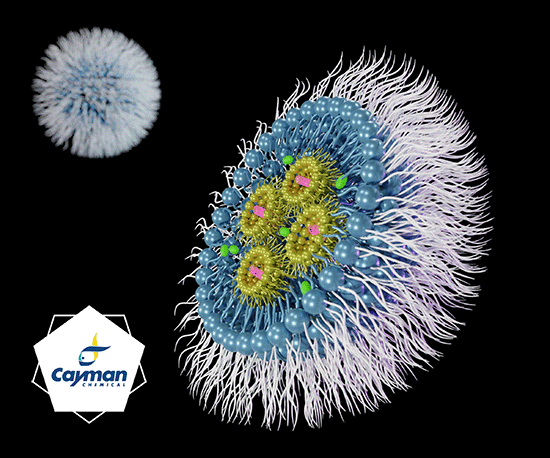
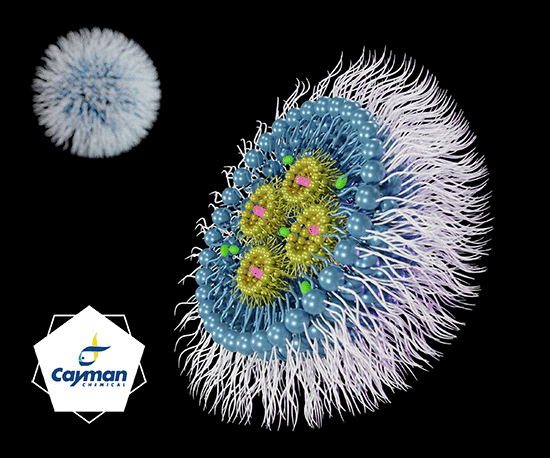
Die bekannteste Variante der „Lipid-basierten Arzneimittelverabreichungssysteme“ (engl.: Lipid-based Drug Delivery Systems, kurz: LBDDS) stellen die sogenannten Lipid-Nanopartikel (LNP) dar. Wie bereits im [ersten Teil unserer kleinen Reihe rund um das Thema LBDDS](https://ressourcen.biomol.com/de/biomol-blog/lipid-based-drug-delivery-entwicklung-mit-cayman-teil-1?hsLang=de) erwähnt, werden LNP vor allem für die Verpackung und Verabreichung von mRNA-basierten Arzneimitteln verwendet. Damit mRNA-Arzneimittel stabil und sicher zu ihrem Zielort gelangen können, müssen sie so verpackt werden, dass sie einerseits vor dem Abbau durch zahlreich vorhandene RNasen geschützt sind, und dass ihnen andererseits die Aufnahme in die Zielzellen ermöglicht wird. Genau diese Eigenschaften bieten LNP!
Im zweiten Teil unserer LBDDS-Blogreihe wird zunächst ein Überblick über die Entwicklungshistorie der LNP und über den „Endosomal Escape“ – ein entscheidender Punkt auf dem Transportweg von LNP – gegeben. Im Anschluss gehen wir auf die möglichen medizinischen Einsatzgebiete von LNP ein – bis hin zur SARS-CoV-2-Impfung!
### Diese Themen warten auf Sie:
[1) Ein Blick auf die Geschichte: Die Entwicklung von Lipid-Nanopartikeln](https://ressourcen.biomol.com/de/biomol-blog/lipid-basierte-drug-delivery-entwicklung-mit-cayman-teil-2#1)
[2) Angekommen in der Zielzelle: Und jetzt?](https://ressourcen.biomol.com/de/biomol-blog/lipid-basierte-drug-delivery-entwicklung-mit-cayman-teil-2#2)
[3) Anwendungsmöglichkeiten von Lipid-Nanopartikeln](https://ressourcen.biomol.com/de/biomol-blog/lipid-basierte-drug-delivery-entwicklung-mit-cayman-teil-2#3)
[](https://hubspot-cta-redirect-eu1-prod.s3.amazonaws.com/cta/redirect/144662462/9d75e303-73aa-4ce9-8cf1-9d9598780cc0)
## **Ein Blick auf die Geschichte: Die Entwicklung von Lipid-Nanopartikeln**
LNP erlangten durch die COVID-19-Pandemie große Bekanntheit. Tatsächlich wird bereits seit fast 4 Jahrzehnten an LNP und deren Anwendungsmöglichkeiten geforscht, und der Erfolg der mRNA-basierten COVID-19-Impfstoffe wäre ohne diese jahrelange Forschung nicht möglich gewesen (Abb. 1). Der erste Meilenstein auf dem Weg hin zu mRNA-basierten Impfstoffen war die Entdeckung der mRNA und ihrer Funktion 1961 [1]. Damals dachte wahrscheinlich noch niemand an einen möglichen Einsatz bei Impfungen. Fast 30 Jahre später, 1989, wurden die ersten kationischen LNP-mRNA-Formulierungen entwickelt [2], und vier weitere Jahre später folgte die Entwicklung von Liposomen-mRNA-Formulierungen für den Einsatz als Grippeimpfstoff [3].
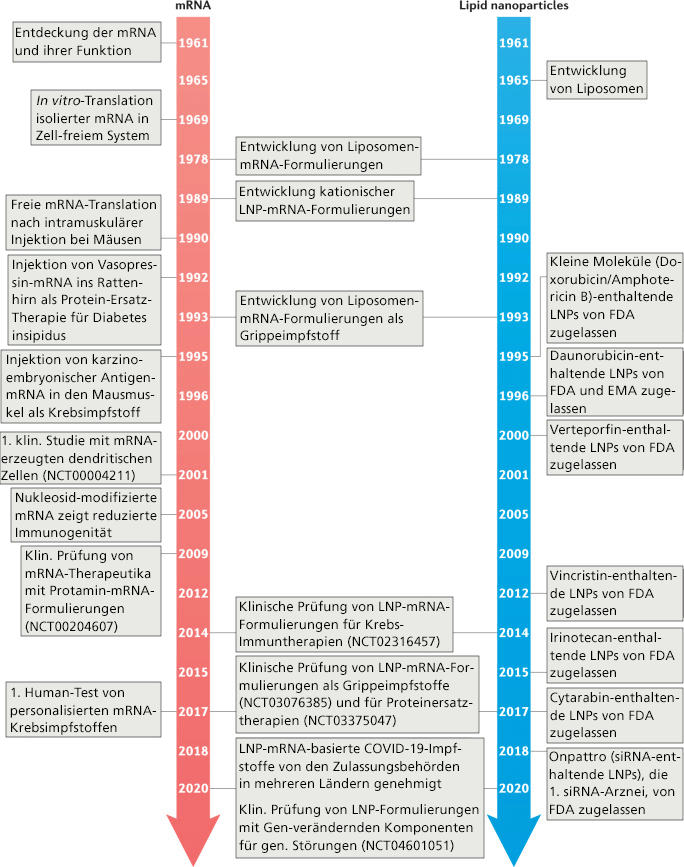
*Abbildung 1: Zeitspanne einiger Meilensteine der mRNA- und LNP-Forschung**. COVID-19, coronavirus disease 2019; EMA, European Medicines Agency; FDA, United States Food and Drug Administration; LNP, Lipid-Nanopartikel. Modifiziert nach [4].
*
Seit Mitte der 90er-Jahre wurden diverse LNP, die z. B. Amphotericin B oder Vincristin einkapselten, hergestellt und von der FDA (U.S. Food and Drug Administration) zugelassen [5]. Parallel wurden zahlreiche klinische Studien durchgeführt, die den Einsatz von LNP-mRNA-Formulierungen gegen unterschiedliche Krankheiten wie Krebs oder Influenza testeten (Abb. 1). Hierzu zählen natürlich auch klinische Untersuchungen zu COVID-19-Impfstoffen, und 2020 erhielten die beiden COVID-19-Vakzine „mRNA-1273“ und „BNT162b“ von den Behörden in mehreren Ländern die Zulassung.
Ein weiterer Meilenstein der jüngeren Vergangenheit ist die Entwicklung und Zulassung des LNP-basierten Arzneistoffes „Onpattro“ [5]. Bei dieser Arznei schließen die LNP sogenannte siRNA (engl.: small interfering RNA) ein, mit deren Hilfe Krankheiten über RNA-Interferenz („Gen-Stilllegung“) behandelt werden sollen. „Onpattro“ stellt damit den ersten zugelassenen Vertreter dieser neuen Wirkstoffklasse dar.
## **Angekommen in der Zielzelle: Und jetzt?**
Damit mRNA-basierte Arzneien ihre therapeutischen Effekte bewirken können, müssen die LNP, welche die mRNA einkapseln, die entsprechenden Zielzellen unbeschadet erreichen [6, 7]. Außerdem muss aus der mRNA genügend Protein-Material generiert werden, um die gewünschte Wirkung zu erreichen. Ein kritischer Schritt auf dem Weg von LNP ist der sogenannte „Endosomal Escape“ (Abb. 2). Nachdem die LNP (mit der enthaltenen mRNA) das Zielgewebe erreicht haben, müssen sie in die Zielzellen gelangen, was über verschiedene endozytotische Prozesse geschehen kann. Nach der Internalisierung durch die Zielzelle befinden sich die LNP im Endosom, aus welchem sie „entkommen“ müssen (daher „Endosomal Escape“). Erst nach diesem Schritt wird die mRNA freigesetzt, wodurch sie im Cytoplasma der Zelle vorliegt und in Protein translatiert werden kann (Abb. 2) [6, 7].
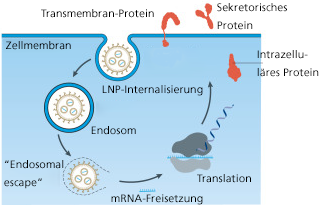
*Abbildung 2: Schematische Darstellung des "Endosomal Escape"**. Nach Internalisierung des LNP mit der eingekapselten mRNA befindet sich der LNP im Endosom. Durch den Endosomal Escape wird der LNP freigesetzt und die mRNA ins Cytoplasma entlassen. Die mRNA wird danach in Protein (transmembran, sekretorisch oder intrazellulär) translatiert. Modifiziert nach [4].*
Dieser Schritt ist von großer Bedeutung, jedoch schafft nur ein kleiner Anteil der LNP tatsächlich den Endosomal Escape [8]. Der Mechanismus ist nicht noch nicht gänzlich verstanden. Es wird vermutet, dass die elektrostatische Interaktion positiv geladener Lipide der LNP mit der negativ geladenen Endosomen-Membran dazu führt, dass mRNA-Moleküle nach und nach ins Cytoplasma gelangen [6, 7]. Daher kann die Zusammensetzung und die Beschaffenheit der Lipide den Endosomal Escape beeinflussen.
[](https://hubspot-cta-redirect-eu1-prod.s3.amazonaws.com/cta/redirect/144662462/88db6ec3-78eb-4fef-9943-a4f8f938f34e)
## **Anwendungsmöglichkeiten von Lipid-Nanopartikeln**
Die Eigenschaften und Einsatzmöglichkeiten von LNP wurden in den letzten Jahrzehnten in zahlreichen klinischen und präklinischen Studien untersucht. Dies war unter anderem der Grund für die schnelle Entwicklung und Anwendung der LNP-mRNA-basierten COVID-19-Impfstoffe. Beispielsweise wurde mRNA-1273 bereits einen Monat nachdem die Genom-Sequenz von SARS-CoV-2 verfügbar war produziert [9, 10]. Die COVID-19-Impfstoffe sind jedoch nur ein Beispiel von vielen, bei denen LNP-mRNA-Formulierungen Anwendung zur Prävention von Infektionskrankheiten finden (sollen).
Aufgrund der einzigartigen Eigenschaften von LNP und mRNA sind sie bestens für den Einsatz in Impfstoffen geeignet. mRNA ist nicht-infektiös, kann nicht ins Genom integrieren und kann für eine große Bandbreite an Antigenen kodieren [9-11]. Darüber hinaus können mehrere mRNAs, die für verschiedene Antigene kodieren, in einem LNP kombiniert werden. Durch ihre kurze Produktionszeit sind LNP-mRNA-basierte Impfstoffe prädestiniert zum Einsatz gegen neu aufkommende Pathogene. Neben der Verwendung bei der COVID-19-Pandemie werden LNP-mRNA-Formulierungen unter anderem auch für Grippe-, Zika-, Rabies- und Ebola-Virus-Impfstoffe getestet [siehe 4]. Außerdem deuten Untersuchungen auch auf eine mögliche Anwendung bei bakteriellen [12] und parasitären [13] Infektionen hin.
LNP-mRNA-basierte Impfstoffe könnten auch bei der Bekämpfung verschiedener Krebsarten helfen und zahlreiche Kandidaten werden aktuell in klinischen Studien untersucht [siehe 4]. Hierzu zählen beispielsweise Vakzine gegen Melanome oder Gastrointestinal-Krebs. Dabei ist ein Ansatz die Verwendung sogenannter „Neoantigene“. Diese sind in der Regel Tumor-spezifisch und weisen eine hohe Immunogenität auf. Ferner sind sie oftmals unterschiedlich zwischen verschiedenen Patienten [7, 11]. Diese Charakteristika erlauben die Entwicklung von personalisierten Impfstoffen. Viele solcher personalisierten Krebs-Vakzine, die auf LNP-mRNA-Formulierungen basieren, befinden sich aktuell in der klinischen Prüfung.
Ein weiteres Anwendungsgebiet für LNP-mRNA-Impfstoffe sind genetischen Erkrankungen. Hierbei liegt der Fokus aktuell insbesondere auf angeborenen Stoffwechselkrankheiten, bei denen ein Schlüsselenzym durch eine Mutation seine Funktion nicht korrekt oder gar nicht mehr ausüben kann. Dies führt zur Akkumulation bestimmter Stoffwechselprodukte, was im schlimmsten Fall zum Tod führen können [14]. Ein Weg zur Behandlung solcher Krankheiten ist der Zusatz von therapeutischen Proteinen, welcher allerdings keine langfristige Heilung bringt. Alternativ werden LNP-mRNA-basierte Proteinersatztherapien getestet [14]. Diese haben den Vorteil, dass die mRNA im Patienten in das gewünschte Protein – egal ob sekretorisches, intrazelluläres oder Transmembran-Protein – translatiert werden kann. Infolge dessen weist das Protein dieselben posttranslationalen Modifikationen auf, die auch das zu ersetzende Protein hätte.
Die Geschichte zeigt, dass mRNA und LNP vielversprechende Werkzeuge für den Einsatz im Bereich der Impfstoffforschung und der Bekämpfung verschiedener Krankheiten sind. Nicht zuletzt die SARS-CoV-2-Pandemie hat bewiesen, wie wichtig die stetige Arbeit an solchen neuen Techniken ist. Und die jüngste Entwicklung der LNP-siRNA-Formulierung deutet darauf hin, dass das Potential von Lipid-basierten Arzneimittelverabreichungssystemen noch lange nicht ausgeschöpft ist. Sie wollen selbst an LBDDS arbeiten? Schauen Sie sich die entsprechenden Produkte unseres Partners [Cayman Chemical](https://www.biomol.com/de/cayman/) an.
In Caymans [Leitfaden zur Formulierung von LNP](https://www.biomol.com/de/ressourcen/kataloge/cayman-chemical/) erfahren Sie außerdem mehr über LBDD-Systeme, die von ihnen beförderten Ladungen und die grundlegenden Konzepte und Verfahren für die Vorbereitung von LNP.
## Quellen
[1] Cobb, M. Who discovered messenger RNA? Curr. Biol. 25, R526–R532 (2015)
[2] Malone, R. W., Felgner, P. L. & Verma, I. M. Cationic liposome- mediated RNA transfection. Proc. Natl Acad. Sci. USA 86, 6077–6081 (1989).
[3] Martinon, F. et al. Induction of virus-specific cytotoxic T lymphocytes in vivo by liposome- entrapped mRNA. Eur. J. Immunol. 23, 1719–1722 (1993).
[4] Hou, X. et al. Lipid nanoparticles for mRNA delivery. Nat. Rev. Mater. 6, 1078–1094 (2021).
[5] Akinc, A. et al. The Onpattro story and the clinical translation of nanomedicines containing nucleic acid-based drugs. Nat. Nanotechnol. 14, 1084–1087 (2019).
[6] Hajj, K. A. & Whitehead, K. A. Tools for translation: non- viral materials for therapeutic mRNA delivery. Nat. Rev. Mater. 2, 17056 (2017).
[7] Kowalski, P. S., Rudra, A., Miao, L. & Anderson, D. G. Delivering the messenger: advances in technologies for therapeutic mRNA delivery. Mol. Ther. 27, 710–728 (2019).
[8] Gilleron, J. et al. Image- based analysis of lipid nanoparticle–mediated siRNA delivery, intracellular trafficking and endosomal escape. Nat. Biotechnol. 31, 638–646 (2013).
[9] Gebre, M. S. et al. Novel approaches for vaccine development. Cell 184, 1589–1603 (2021).
[10] Kim, J., Eygeris, Y., Gupta, M. & Sahay, G. Self- assembled mRNA vaccines. Adv. Drug Deliv. Rev. 170, 83–112 (2021).
[11] Pardi, N., Hogan, M. J., Porter, F. W. & Weissman, D. mRNA vaccines — a new era in vaccinology. Nat. Rev. Drug Discov. 17, 261–279 (2018).
[12] Maruggi, G. et al. Immunogenicity and protective efficacy induced by self- amplifying mRNA vaccines encoding bacterial antigens. Vaccine 35, 361–368 (2017).
[13] Garcia, A. B. et al. Neutralization of the Plasmodiumencoded MIF ortholog confers protective immunity against malaria infection. Nat. Commun. 9, 2714 (2018).
[14] Zhao, W., Hou, X., Vick, O. G. & Dong, Y. RNA delivery biomaterials for the treatment of genetic and rare diseases. Biomaterials 217, 119291 (2019).
---
## Das könnte Sie auch interessieren …
WEITERE BLOGBEITRÄGE
##### LNP jenseits von mRNA-Impfstoffen - Wie geht es jetzt weiter?
Lipid-Nanopartikel (LNP) sind im Begriff, die moderne Medizin zu revolutionieren. Die Technologie hat immense Möglichkeiten, sich über...
- [Cayman Chemical](https://ressourcen.biomol.com/de/biomol-blog/tag/cayman-chemical)
- [Lipid-Nanopartikel](https://ressourcen.biomol.com/de/biomol-blog/tag/lipid-nanopartikel)
- [Lipide](https://ressourcen.biomol.com/de/biomol-blog/tag/lipide)
##### Lipid-basierte Drug Delivery-Entwicklung mit Cayman – Teil 1
Lipid-basierte Arzneimittelverabreichungssysteme (engl.: Lipid-based Drug Delivery Systems, kurz: LBDDS) werden bereits seit den 1960er...
- [Cayman Chemical](https://ressourcen.biomol.com/de/biomol-blog/tag/cayman-chemical)
- [Coronavirus](https://ressourcen.biomol.com/de/biomol-blog/tag/coronavirus)
- [Lipid-Nanopartikel](https://ressourcen.biomol.com/de/biomol-blog/tag/lipid-nanopartikel)
- [Viren](https://ressourcen.biomol.com/de/biomol-blog/tag/viren)
- [Lipide](https://ressourcen.biomol.com/de/biomol-blog/tag/lipide)
##### Die 10 meistzitierten Produkte bei Biomol
Biomol liefert mehr als 625.000 Produkte für die Life-Science-Forschung. Viele dieser Produkte werden verwendet, um neue Erkenntnissen zu...
- [Bethyl](https://ressourcen.biomol.com/de/biomol-blog/tag/bethyl)
- [Rockland](https://ressourcen.biomol.com/de/biomol-blog/tag/rockland)
- [Cayman Chemical](https://ressourcen.biomol.com/de/biomol-blog/tag/cayman-chemical)
- [Biomol](https://ressourcen.biomol.com/de/biomol-blog/tag/biomol)
- [Journal Club](https://ressourcen.biomol.com/de/biomol-blog/tag/journal-club)
- [Antikörper](https://ressourcen.biomol.com/de/biomol-blog/tag/antikörper)
Biomol-Newsletter
Abonnieren Sie den kostenlosen Biomol-Newsletter und bleiben Sie bestens informiert über die neuesten Aktionen von Biomol. Zusätzlich erhalten Sie einen **10€ Gutschein** für Ihre nächste Bestellung.
Hier geht's zur Newsletter-Anmeldung! **
Wichtiger Hinweis
Unsere Produkte richten sich ausschließlich an Wissenschaftler*innen und Einkäufer*innen in Forschungseinrichtungen. **Eine Lieferung an Privatpersonen ist ausgeschlossen.**
Sie finden uns auch auf
[** ](https://www.facebook.com/biomol) [** ](https://www.linkedin.com/company/biomol-gmbh/) [** ](https://www.xing.com/companies/biomolgmbh) [** ](https://www.youtube.com/channel/UCRD-h8vgRJc2p83-y_ITJDA) [ ](https://mastodon.social/@biomol)
Rechtliches
- [ Datenschutzerklärung ](https://www.biomol.com/de/datenschutzerklaerung)
- Cookie-Einstellungen
- [ Markenzeichen ](https://www.biomol.com/de/markenzeichen)
- [ AGB ](https://www.biomol.com/de/agb)
- [ Impressum ](https://www.biomol.com/de/impressum)
Über Biomol
- [ Kontakt ](https://www.biomol.com/de/kontakt)
- [ Technischer Kundenservice ](https://www.biomol.com/de/technischer-kundenservice)
- [ Häufige Fragen ](https://www.biomol.com/de/haeufige-fragen)
- [ Versandkosten ](https://www.biomol.com/de/versandkosten)
- [ Produkt-Suchtipps ](https://www.biomol.com/de/produkt-suchtipps)
- [ Distributoren ](https://www.biomol.com/de/distributoren)
- [ Firmengeschichte ](https://www.biomol.com/de/firmengeschichte)
- [ Mitgliedschaften ](https://www.biomol.com/de/mitgliedschaften)
- [ Jobangebote ](https://www.biomol.com/de/jobangebote)
- [ Sitemap ](https://www.biomol.com/de/sitemap)
Kundenservice
Mo - Do, 09:00 - 17:00 Uhr
Fr, 09:00 - 16:00 Uhr
Tel: [+49-40-8532600](tel:+49-40-8532600)
E-mail: [info@biomol.com](mailto:info@biomol.com)
Auszeichnungen
[ ](https://www.biomol.com/de/awards)
Zahlungsarten

Versand
 Wir versenden mit UPS Express Saver.
**Keine** [Versand- und Kühlkosten](https://www.biomol.com/de/versandkosten) bei Online-Bestellungen über 1.000 € innerhalb Deutschlands *(gilt nicht bei Versand frischer Blutprodukte von [Research Donors](https://www.biomol.com/de/research-donors/))*.
[** ](https://www.facebook.com/biomol) [** ](https://www.linkedin.com/company/biomol-gmbh/) [** ](https://www.xing.com/companies/biomolgmbh) [** ](https://www.youtube.com/channel/UCRD-h8vgRJc2p83-y_ITJDA) [ ](https://mastodon.social/@biomol)
© 2025 Biomol GmbH - Life Science Shop | Kieler Straße 303a | 22525 Hamburg | Deutschland
```json
{
"@context" : "https://schema.org",
"@type" : "BlogPosting",
"author" : {
"@type" : "Person",
"name" : "Dr. Jan Stäcker",
"url" : "https://ressourcen.biomol.com/de/biomol-blog/author/dr-jan-stäcker"
},
"dateModified" : "2026-03-02T12:30:08.937Z",
"datePublished" : "2022-08-23T22:00:00.000Z",
"headline" : "Lipid-basierte Drug Delivery-Entwicklung mit Cayman – Teil 2",
"image" : [ "https://ressourcen.biomol.com/hubfs/Imported_Blog_Media/LBDDs_Preview_new-Apr-07-2025-08-34-45-6077-PM.png" ],
"mainEntityOfPage" : {
"@id" : "https://ressourcen.biomol.com/de/biomol-blog/lipid-basierte-drug-delivery-entwicklung-mit-cayman-teil-2",
"@type" : "WebPage"
},
"publisher" : {
"@type" : "Organization",
"logo" : {
"@type" : "ImageObject",
"url" : "https://ressourcen.biomol.com/hubfs/Biomol/biomol-logo.png"
}
}
}
```